The Family Upstairs: A Review

I recently got The Family Upstairs by Lisa Jewell in as part of my Book of the Month box. I read it in one day. I give it a 4 star rating!

I tend to read thrillers to break up my fantasy binges (in fact, I put aside Fate of the Fallen because I needed to mentally shake up my mind after all of my recent fantasy reads before I continued). Here’s the thing, modern thrillers should confuse you a bit. For me, generally thrillers can be boring, been done a million times, or overambitious and messy. There’s a very fiiiiine line for me with thrillers because unlike fantasy, the options ARE limited. So being unique and fresh can be a struggle. Lisa Jewell got me confused. In a good way. If I can survive more than half of a thriller not figuring out THE MAJOR plot line, it passes my test.

Libby receives an inheritance of a multimillion dollar manor in London when she turns 25. She was orphaned in infancy and found next to three dead bodies, including the owners of the manor. The story follows her storyline, as well as Henry and Lucy, who were also raised in the house at the time. The three bodies were found with traces of poison in their system, all wearing the same black clothing. The house was bare and devoid of any personal touches or luxury items. The bodies were taut and thin, emaciated. The police never found out the reasoning behind the deaths, never found the missing other children in the house, and Libby was turned over to an adoptive family.

The thing I loved about this book is that the author delved into cult mentality. The children’s parents find themselves inviting a group into the house that slowly takes over their living space. Their leader, David uses his presence and cunning to strip the family down to the basics under the premise of unloading the burdens of materialistic values. He controls the food they put in their body, the possessions they are able to hold onto, the money they spend, the subjects they study. He wants them to be utterly dependent, weak, and vulnerable. It goes into the effects of having adults like this in your life. Adults who are controlling and adults willing to let other people make decisions about their kids, especially to their detriment. Almost all of the characters have mentally suffered because of their environment. How could you not? You see those documentaries of kids who are chained to beds in their parent’s attic for years before they escape and do you expect someone to be “normal” after that? I would be STUNNED if someone escaped mentally unscathed after something like that? In true, just-got-locked-in-a-room-and-basically-starved-at-the-hands-of-sadistic-adult fashion, characters in this book are MESSED UP. You get a mentally deficient unreliable narrator. You get insecure adults who fall into the hands of predators, who can’t break a cycle. You get children that never felt loved who become adults who never felt loved.

The bad about this story. I ALMOST wavered between a 3.5 and a 4 for this. Henry’s storyline ended up being exactly what I expected. The other characters surprised me a bit more. There’s also a murder in here of a character that I didn’t think was ENTIRELY necessary to the story, but was understandable. The ending was mostly satisfactory but the last few paragraphs were a bit of an eye roll and cliche in the thriller genre in regards to the “cliffhanger” but nothing to spoil the entire book. Some of the “confusing” bits seemed a little jumbled and thoughtless, but for the most part, was cohesive.

Ultimately, this book was fast paced. It wasn’t the same old song and dance. It kept me guessing for more than half of the story and most of the plot lines. The writing was engaging. The good outweighed the bad and this was an enjoyable read that I was about to devour. I think it’s worth the read for those who like this genre!

The Black Prism: A review

“Light cannot be chained.” 

4.5 stars to The Black Prism! It’s so refreshing to read a fantasy series with a unique magic system that is also supported by fantastic writing. Brent Weeks brings humor and heartbreak to this world in the perfect mix. The magic system revolves around chromaturgy, which is harnessing light to create luxin. Drafters are people that can harness this light, and each visible color in the spectrum has a different property/power. 

The story begins with utterly average Kip watching his childhood friends die when his city is massacred by the local king, King Garadul. Kip has lead a meager life so far, raised by an addict mother who seems to resent him. He has never known his father. The attack on the city actually leads him to meet his father (spoiler, though this happens in the first few chapters, so not too much of a surprise): The Prism, Gavin Guile. The Prism is the one person each generation that can draft every color. So yeah, he’s pretty much a *big deal*. 

Kip eventually joins with Gavin to study chromaturgy and to defend a nation against King Garadul’s forces. I don’t want to go too much into what actually happens, because a lot of the story is wound tightly with surprises that might be spoiled if I go too deeply into the plot. Here’s a few things that play a huge role in the story, if you’re on the fence about reading it: 

•brotherly rivalry: Gavin and his brother Dazen has been pitted against each other since their youth by their father. Both are strong in chromaturgy and the rivalry ends up eating them both alive. MAJOR decisions and twists in this story are based off of this rivalry.

•good vs bad: things aren’t always what they seem. Kip, his friend Liv, Gavin, and Dazen all make decisions that they think are best. This is a story that truly delves into the gray areas of leadership, following leadership, and the well intentions (and sometimes, devastation) of revolution.

•nature vs nurture and the effect: Kip has never felt love in his life, having a cruel addict mother. He still feels an obligation towards her and is affected by his relationship with her. Once he meets Gavin, he starts consciously making decisions that speak to his character. He is self deprecating and insecure after years of being treated harshly, but his true “Guile courage” shows through. Kip eventually uncovers a secret that tests his allegiance towards each of his parents. 

I knocked off some points because there are some times that the focus on the female form is a bit immature and could be viewed as problematic. I enjoyed the story enough to be able to look past it and don’t believe any ill intent was meant (though ignorance isn’t an excuse, either). I’m hoping he’s a bit more conscious of this in future books!

Brent Weeks creates an enticing world. His characters have depth, heart, and humor to them. His world wasn’t predictable to me, as fantasy books can veer to. He’s a true forerunner in the fantasy genre. Now… to The Blinding Knife!


“You have to be a little bad to make history.”

November TBR Ambitions

I’m 7 days into November and I’m putting together my first TBR list. I usually never line-up my reads but I’m going to see how that works for me this month.

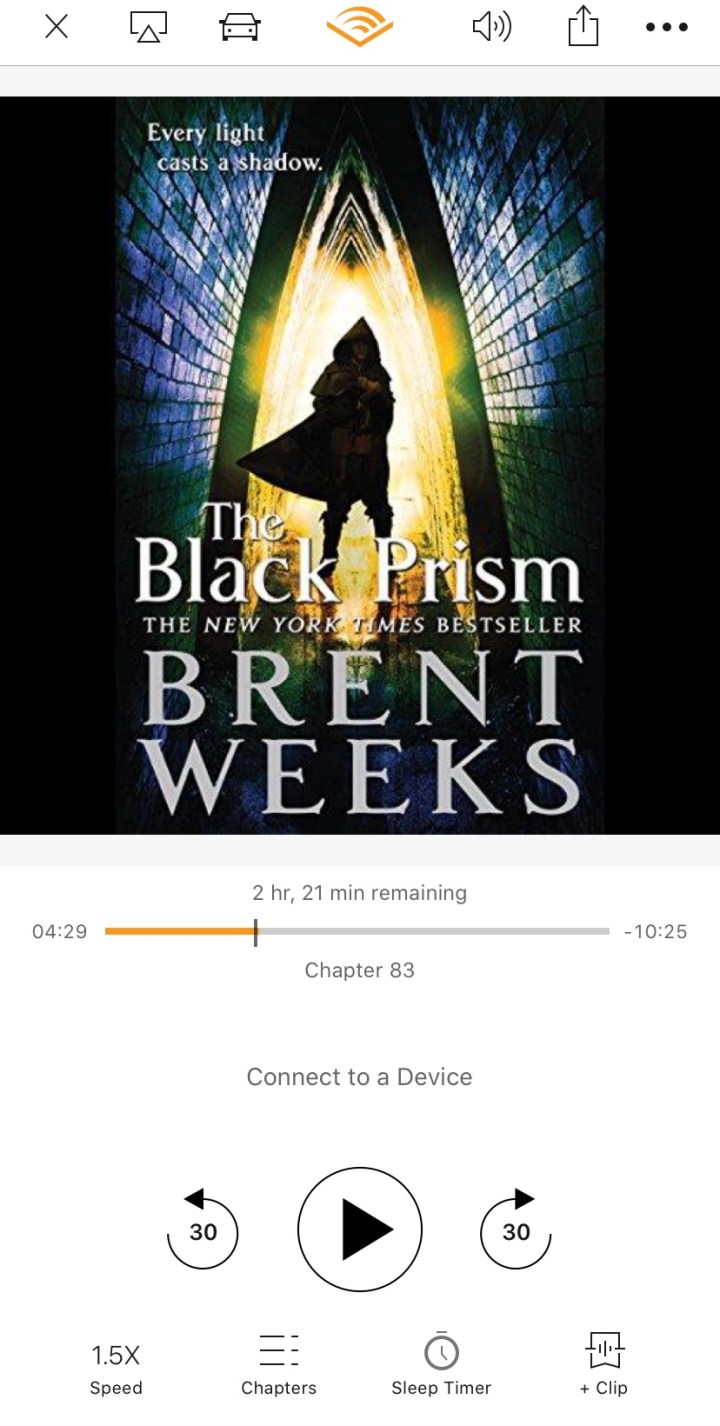
First off, I’m planning on finishing my audible version of The Black Prism by Brent Weeks.

I am absolutely loving it. I am looking forward to continuing with the series and completely kicking myself for prolonging the reading of Brent’s works. I’ll do a review on this once I’m done.

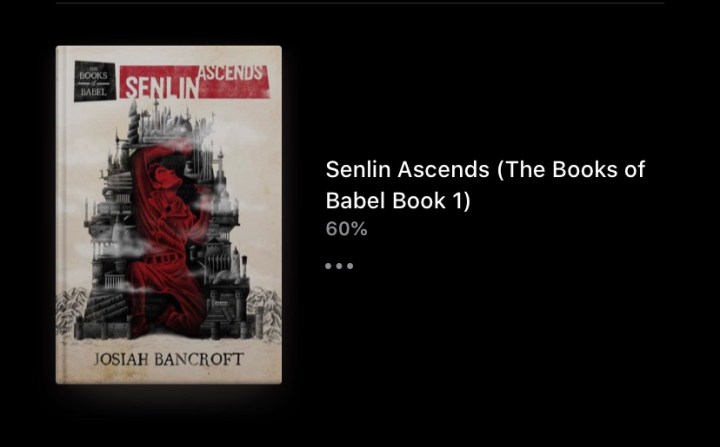
Second, I really want to finish Senlin Ascends by Josiah Bancroft this week! I’ve been S L O W L Y making my way through this because I stupidly kept adding books into my daily reading. Poor Senlin has taking a backseat in my reading schedule and it’s mostly because it is something I’m reading on my iBooks app. For some reason… audible, hard copies, and kindle get my attention first. I think that’s because I get distracted by notifications and a million other things on my phone. YOU DESERVE MORE THAN ME, SENLIN. Seriously, this is a unique and wonderful story thus far. The fact that this was self-published and originally didn’t garner much interest is a testament to the success that can come when authors NEVER quit while trying to get their work noticed.

Lastly, I want to finish up Fate of the Fallen by Kel Kade. I have not gotten very far. As I said before, I’ve been reading about four books at once, and with three of them being fantasy, it has gotten pushed aside. My book of the month box will be in today or tomorrow so I want to get through this one before starting one of those! Once I get through Senlin Ascends, I’ll be able to focus more on this.

Next up once I finish a few of these:

•Audible with continue with Brent Weeks! The Blinding Knife is next in line, so hopefully I’ll start that today or tomorrow.

•Next hardcopy will be: The Subtle Knife by Philip Pullman. I’ve been EAGER to get to this one so it will be a reward for getting through my current reads. Once that is finished, I’ll be going to The Family Upstairs by Lisa Jewell, which was one of my Book of the Month books.

•Kindle read will be Master of Sorrows by Justin T. Call. I have been wanting to read this for a while and got approved by Netgalley for it, so it has been bumped up on my TBR list.

Those are my goal reads for November but I’ve got a list of backups once those are finished:

•Lanny by Max Porter (one of my best childhood friends sent this to me so it’s high on my list)

Before and After by Judy Christie and Lisa Wingate (I absolutely loved Before We Were Yours and can’t wait to read real life accounts of children who survived the Tennessee Children’s Home

•Tender is the Night by F. Scott Fitzgerald

Limited Wish by Mark Lawrence

The Great Pretender by Susannah Cahalan

•Something Wicked This Way Comes by Ray Bradbury

Maybe You Should Talk to Someone by Lori Gottlieb

These are my current TBRs! Let me know yours, and if you read/enjoyed any of these in the comments below!

A Break From The Norm: Overstimulation as a Mother

So… I’m gonna go off topic from my usual blog posts, which is obviously books. I am going to vent about something that has affected me since my son was born: Overstimulation of Touch.

There’s nothing that will make your mom guilt flare up like the sudden onset of resentment towards being touched 24/7. My son loves me with every fiber of his being. I am his person. He is a momma’s boy to the 1000th degree. But I broke down crying today. In general, I am not a touchy feely person. I am the notorious one arm hugger. I am the awkward patter. I am not a PDA person. I love people fiercely but if I’m being overly affectionate, I’m probably a couple drinks past buzzed. I like personal space. Despite all of this, I am very, very, very affectionate towards my son. He gets love and kisses and the whole wrapped arm hugs constantly. I wake up every night for him when he needs me. But every once and a while I break down from overstimulation. Here’s an example of (half) my day: I slept with him on top of me all night because he had an earache. I laid with him and watched a movie and my nephew to try to get them to calm down, which resulted in them rolling all over me and tugging on my hair the whole time. When his cousin goes down for a nap, he wants a piggy back ride throughout the house while I’m cleaning, or he hangs onto my leg while I drag him around. I tried to lay my son down for a nap since he only slept five hours last night, he has a fist full of my hair and kisses me all over my arms and legs and face for a good ten minutes. Cute, right? After a week of him being sick, very little sleep on my part, a lot of touching, a cramped body from sleeping with knees in my back and elbows in my side every night, and a boy who ONLY wants his mom 24/7… I just broke down crying. Sometimes I don’t feel like I have enough left of me for anyone else because I give so much to him. My reading and blogging are two of the things that keeps me sane. I work a few days a week to get out of the house, but I am primarily a stay at home mother. My days don’t belong to me, and that’s usually fine. That’s what happens when you’re a parent and especially a mother. But some days are hard. Sometimes you fantasize about ONE day without being touched. Lets be real, I would end up breaking that myself by swooping my son up in a gigantic hug and smooshing his face with kisses, but it’s okay to fantasize.

This is all such a cliche. And I feel so guilty for it every time this happens. My son is sick and every nerve is on edge because I’m overstimulated. One day my son is going to be older and won’t want anything to do with me. The touching, the hugging, the constant kisses, the rolling on top of me, the jumping, the crunching of my body under his weight, the hair pulling. I know I’ll miss it. But today it is hard. It has been hard before. It will be hard again. I feel weak minded and weak spirited. I love you, Sawyer. And I’m sorry that sometimes the cracks show through. But the best thing about writing it, is that it’s therapeutic. I feel strength in admitting my weaknesses. Sometimes it takes more of a toll pretending to be strong always than just letting the breakdown happen. The old saying, “there’s beauty in the breakdown,” is so apt because you’re able to rebuild mentally after the breakdown.

If you got this far, thanks for reading and letting me use my blog for multiple purposes.

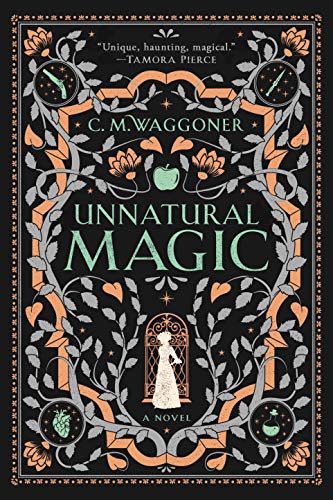
Unnatural Magic by C.M. Waggoner

Unnatural Magic by C.M. Waggoner

I would like to thank Netgalley and Berkeley Publishing for approving me for this early copy to review. 

Unnatural Magic gets 3.5 stars from me. The premise of the story really intrigued me. It follows a couple storylines. Onna is a brilliant young woman who has studied to enter a prestigious wizarding school. She is clearly the best wizard of her age but is still denied from the school because she’s a woman. She eventually ends up going to another country to enter to their school and ends up being chosen as an apprentice for one of the greatest wizards alive, the Lord Mage Logos. This leads her to investigate a series of troll killings.

On the other hand, we have Tsira, who is a troll. Trolls are actually generally wealthy and successful, and humans like to emulate them. Clans are headed by reigs, which are usually considered female by human standard, but trolls are rather androgynous in actuality. Tsira meets Jeckran, a human who she teams up with to work jobs that are in need of a strong arm. 

The things I loved about this book: the contrast between prejudices against women and empowerment of women in different cultures. In troll culture, the women lead, they are worshipped, they sleep with whomever they please and aren’t judged. They choose their mate(s), they are physically strong. In Onna’s homeland, women are expected to stay chaste until they marry, and do the housework. Even when she goes to Hexos, she notices the differences in culture. The people there are amorous and it is not uncommon to have many lovers before settling down, whether you’re a man or woman.

Another thing I loved: the fluidity of sexuality. The femininity that men exhibited. So refreshing compared to the toxic masculine traits men can often display. Jeckran is a tough human soldier willing to do what it takes to survive. When he meets Tsira, he becomes infatuated. He isn’t sure whether she is a male or a woman, but he starts loving her and lusting after her before he knows which she is. She takes the lead, she picks him up as easy as a sack of potatoes, she takes the lead in sex, she protects him. And he lets her without embarrassment or a thought to his masculinity. The role reversal is refreshing. Logos exhibits signs of flamboyance and tenderness. The men in this series don’t have to be tough constantly to protect their manhood.

At first the troll/human thing I thought was going to make me cringe but it was pretty well done. I was actually rooting for their relationship.

The bad thing about this book: while I was completely engaged when characters were speaking, when they weren’t, the book dragged. Sometimes there was too much focus on minute details. This could also be because I’ve been a bit overstimulated between the multiple books I’m reading, so don’t write this book off because of that. 

One more thing that didn’t make it a perfect read for me: I get the building up of the four main characters before they meet… but it was a long build up. Most of the book was the two set of characters doing things on their own and then suddenly meeting towards the end of the book. It felt like a few chapters of them achieving something together and instantly turning into almost a family before the book ended. I would have loved to have them meeting earlier in the book. But that would be a personal preference and not a reflection on the author’s writing or decision making. This is her story and the way she wanted it to be.

The troll killer was obvious to me, but it might not be to some. I’m not gonna share my reasons why it is obvious or it will completely ruin it for those who haven’t read the book.

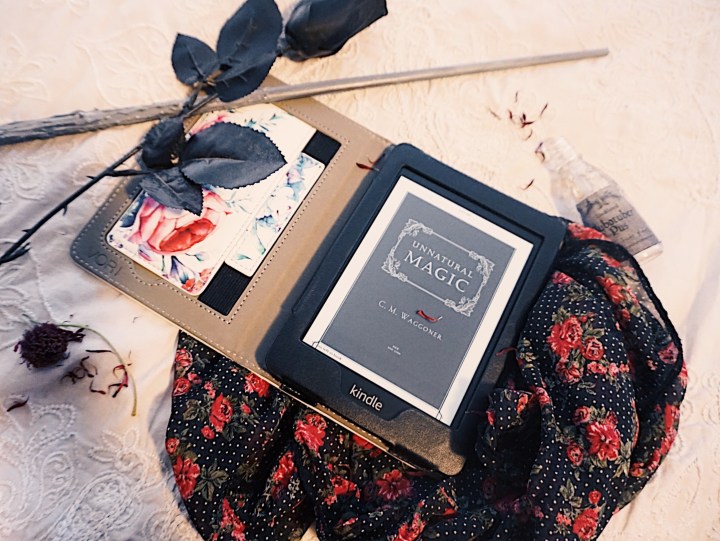
All in all, this was a great debut with some flaws, which is to be expected! I think many people will enjoy this book and it’s worth the read. It comes out tomorrow, November 5th. I inserted a copy of the absolutely gorgeous cover before, as I had the early reader’s copy on my kindle.

Queen of Paris: A review

Thanks to Netgalley for the early copy and to Blackstone for approving my request to read.

Well, The Queen of Paris gets two stars from me. First, the good. Pamela Bunnings Ewen writes beautifully. She uses lush prose and brings the beautiful scenery and luxury of Coco Chanel’s lifestyle to the page with astounding clarity. She has certainly done a thorough job with her research. That’s THE only reason I’m giving the book any stars.

Now, the bad. I somehow did not know that Coco Chanel was a Nazi Collaborator. I could blame that on not really being familiar or a fan girl of the Chanel brand, but my own ignorance is appalling. I requested this book because I figured it would be cool to learn about a woman who built a legacy long after she had passed on.

Coco seems like the type of woman who ruthlessly went for what she wanted. To the point of selfishness and at times, humiliation. This story does not depict a kind or even likable person in my eyes. It might just be the subject matter, but I could not find admiration in Coco’s choice to collaborate with Nazis, and even take a Nazi lover, even if it was to help her friends and family. I can understand her thought process, as it would be unimaginable to know that your friends and family were in the hands of terrible people (that you are also willingly sleeping with). But, I think the admiration for people in that time lies with the ones who did everything to survive and fight AGAINST the Nazi wishes.

This book made me realize that Coco Chanel was talented and commanding, but a terribly lonely social climber… willing to tear the world apart to suit her whims and fancies. I could find no joy in this book because of what I learned, but sadly, I know there’s plenty of people out there who are Chanel fans who will use this book as a means to heighten her pedestal.

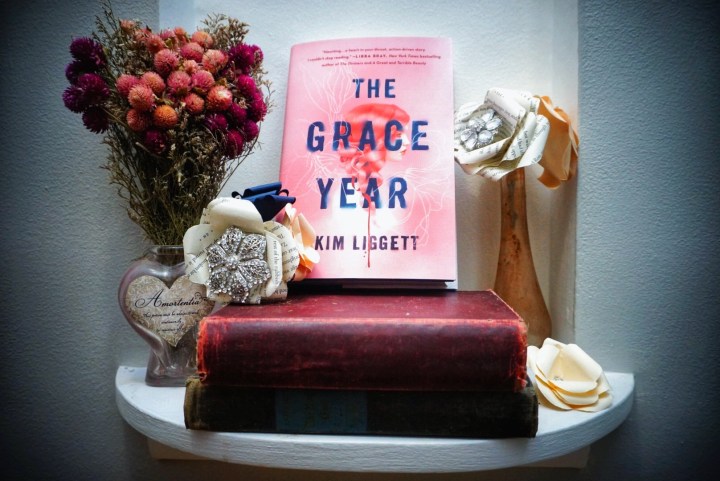
The Grace Year: A review

“The things we do to girls, whether we put them on pedestals only to tear them down, or use them for parts and holes, we are all complicit in this. But everything touches everything else, and I have to believe some good will come out of all this destruction. The men will never end the grace year. But maybe we can.”

*

The Grace Year by Kim Liggett lingers between a 3 & 1/2 and 4  star read for me. I am not much of a YA reader anymore so I think it will rate higher for those who are. It is a very intriguing read and has a unique plot. For women’s 16th year, they are sent away to come into their “magic” and to expel themselves of it so that men aren’t tempted or affected by it. They are expected to live a year on their own on an island away from civilization with limited supplies while protecting themselves from poachers who will kill them, the jealousy of other women, and the natural elements. Once they return, they are rewarded with marriage, if they’re special enough to be chosen, or a job if they’re considered unlucky. They can also be thrown to the outskirts to be a prostitute if they are rebellious, or can be treated to a death by hanging if they show signs of magic. It focuses on Tierney, who never wants to be married and will gladly take a job to not be considered property of a man. 
*
This world touches on the all too real tradition of women being treated as property, bartered off to men, and their decisions regarding their lives and their bodies being dictated by the male population. 
*

It emphasizes the absurd notion that women are responsible for the gazes of men when they show “a little skin.” We have seen the extent of that changed over time: from ankles and wrists, to calves, to knees, to upper legs, shoulders, and cleavage. Why have we been trained to be ashamed of mere skin? Why is it considered our responsibility to make sure men control themselves? Young girls are leered at by grown men. We are always going to be drawn to the human form, but there’s a difference between respectful interest and undiluted lecherous advances. Women have always had to fight for control over their own body. The women in this series are taught to feel ashamed of their “magic” until it serves a purpose for the men. 
*
I was getting annoyed with Tierney turning to questioning herself instead of the traditions… but then I realized that simulates real life. What woman hasn’t thought there might be wrong with them or critiqued themself and the way they  carry themselves, look, or thought process? Not many. 
*
One of my issues with this book was how drawn out some of the unimportant scenes were and then how quickly some of the more important things happen. I would find myself skimming parts because they weren’t necessary. 
*
I will say, the author absolutely surprised me with who the “usurper” was. Throughout the story, there’s tales of a rebellious woman who helps the people of the outskirts and rallies behind the back of the men. I wish this had played a bigger part in the story, because that was an interesting storyline. It was sort of thrown in here and there. 
*
The ending was bittersweet. I like that it left it as a cliffhanger but it also left me wondering if anything was accomplished. We are treated to a bit of the secret society of the usurper but not enough to show us whether things are likely to advance. We can only hope that they future generations fix this society as Tierney hopes. 
 *
One very cool thing that this book proclaims: women are stronger together. When we set aside our problems and our preconceived notions, when we insist we matter, when we love ourselves and the women around us… there’s power in that. We deserve that power. It isn’t magic, we aren’t temptresses, we aren’t wrong, we aren’t things to be controlled and owned. Our womanhood is beautiful and it should be no concern of men. 

Nothing to See Here by Kevin Wilson: A review

Holy shit. You know when you finish a book and you have this adrenaline rush because you just enjoyed a book so wholly that it sparks something inside of you? Nothing to See Here did that for me.

Kevin Wilson did something cool here. He took a realistic setting and added a bit of magic to it. Not your typical spell/witchcraft magic, but well… kids that spontaneously combust without causing harm to themself. 
This story is about a woman who gets a call from her childhood best friend. Lillian rushes to Madison’s house for a business proposition. Madison’s husband is in the Senate and expecting his career to further even more. He just has one little problem: yep, his kids ignite when they’re angry. Not the usual tantrum, but full fledged flames. You can see how this may  be concerning to a man who wants to go far into politics. Lillian is asked to be a “governess” to these children, to keep them out of the public eye, and to learn more about their… uh, combustion issues. 
I can’t think of much I didn’t love about this story, and the few flaws I originally saw were completely diminished by time I finished this book. The humor is blunt and peppered with casual profanity and the realism of the story plays off so well with the abnormality at hand. The theme of this book showcases that humans are not perfect. A lot of us are fucking weird, as Lillian would say. These children have been taught all of their lives that something is wrong with them. There’s a twist at the end of the story that really just drives a point home: we all feel weird, we all feel a bit unsafe, we all are messed up in some way… and when we realize that we aren’t alone in that, we are able to find our power and our peace. We want someone to understand us. 
A few more themes I really enjoyed in this book:
A. Parents aren’t perfect. Everything you do will affect your kid. Whether it is sending them off to boarding school, like characters in this book. Or treating them too much like adults, or ignoring their needs and wants. You can screw up your kids by being too protective. No parent is perfect. The most well intentions will shape your child, good or bad. Thoughtlessness will shape your child. Selfishness. Unselfishness. Which leads to…
B. When you own the role of parenting, you accept that your life is not wholly your own anymore. You don’t get to do everything for your own self interest anymore. A good parent gives up a part of themself to make room for another human’s best interest. It is scary, but it is rewarding. 
C. Casual sexuality. Lillian never has to proclaim her sexuality to the readers. She is who she is. She clearly likes women and isn’t interested in male companionship. The author doesn’t see the need to make this the forefront of the story, it is sewn throughout. Not hiding, not the main focus. Just part of Lillian. We are who we are, without any explanation needed.  
Kevin Wilson brought laughter bubbling out of me and filled my heart with some warmth. Nothing to See Here has sad times accompanied by good times. Nothing is perfect within this book, and that made it a perfect book TO me. 

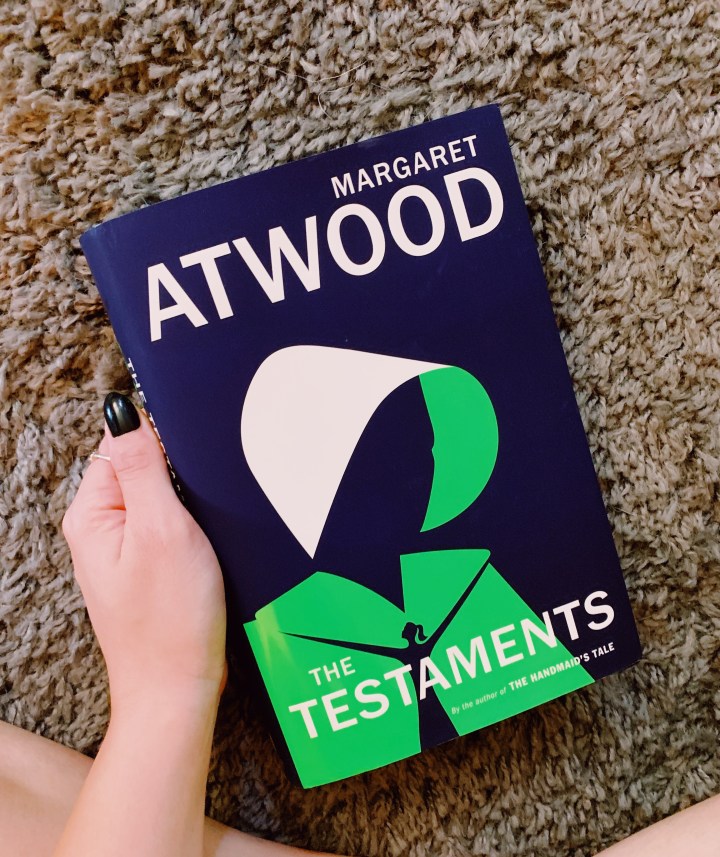
The Testaments (A sequel to Handmaid’s Tale)

Margaret Atwood wrote the sequel to The Handmaid’s Tale 30 years after its publication. The Testaments gets 3.5 stars from me. This is something I should have also addressed in my first blog: I will be THE FIRST to admit that I’m a pretty lenient rater. I’m getting more critical as I get older, but I also prefer to critique than tear down. Ya wrote a damn book, and that’s fucking awesome. You should get some praise just for that! Other people are harsher raters than me and that’s completely fine.

So… Was this book needed? Not for everyone. The thing is… with the state of our world, for some people, this will offer relief. For some people, it will be exactly what they needed. Atwood could have been more cruel to her characters in this book, but Handmaid’s Tale covered that. This book offers hope in the face of tyranny and doesn’t spotlight the abusive techniques used as heavily as it did in HT. June, Nicole, and Agnes are the beacons of that hope. Aunt Lydia offers that hope. Somewhere out there, people are brave enough to start the revolution. People are able to attempt atonement for their wrongdoings by setting the world onto a better path.

This book most certainly has a different tone than Handmaid’s. Not AS dark. It should have a different tone though, in my opinion. Testaments isn’t June’s story. She had very little reason for hope in her telling of Handmaid’s Tale, and so the gloomy tone suited the story. This was told from three POVs. One: Aunt Lydia’s, which is fascinating, as we have been exposed to all of the cruelties she has inflicted on others. But we get to see a different side of her, we get to see background and how she got involved with Gilead. Which answered a question that plagued me: how the heck do you get involved in the abuse and control of your fellow women? We see some fight vs flight instincts from her. Her POV in this story confirms one thing: Lydia gets shit done, one way or another. Those second and third POVs are June’s daughters. One who has grown up within the borders of Gilead and one who hasn’t. This is excellent for contrasting the modern world with Gilead’s drab world.

Margaret Atwood is good at writing different voices. June was solemn but sassy. Aunt Lydia is hard and often cruel, but nurturing and calculating. Agnes is submissive and tender, as Gilead has raised her to be, but cunning with a defiant streak. Nicole is headstrong and reckless, but brave. June’s daughters’ voices also show their immaturity, as two young girls, they aren’t as sure of themselves as June was.

As I said earlier, Atwood COULD have left us with Handmaid’s. The tale would forever haunt us and things could have been left to our imagination. That would have been fine. But people wanted to know these answers. For decades, she’s been asked them. I think if I was her, at this particular time, I would have been moved to give answers. We are a nation under stress, and currently Handmaid’s Tale on Hulu is larger than life and looming like a warning in front of us. If this book doesn’t fit your ideal of what you wanted Gilead’s history to be, keep your memory of Handmaid’s and don’t reread Testaments. Simple as that. I think this book was a good reminder that history may be dark, humans may never fully find peace and learn from the mistakes of the past… but we evolve. We fight. We are entitled to change our political opinions and affiliations and rally against the injustices in the world. A book that shines light where there was once only darkness is not a flaw. It’s a reprieve.

Another theme I loved from this book is that sisterhood is what you make of it. Women supporting women creates a love like no other, blood relation or not. There’s something to be said about women choosing to help one another, even if it means you might carry the burden of consequence for it.

Some cons: the pacing was off. While the message was beautiful, it could have been much more powerful if the pacing was a bit more believable. Daisy’s timeline into Nicole into Jade into Pearl Girl seemed very skewed and unbelievable. Her circumstances could provide a little leeway in the storyline but not enough to make the rush totally plausible. I’m pretty sure it would take me more than a day or so to be convinced by almost total strangers to sneak into one of the most brutal and ironclad regimes in the world, especially when your parents have kept you sheltered your entire life… and you just witnessed firsthand the harm that Gilead could do. I’m not saying she SHOULDN’T have agreed, because she is June’s daughter (aka badass runs in her blood), I just think it might have taken more coaxing. Agnes’ and Aunt Lydia’s pacing were more on par with what I could expect. Aunt Lydia’s plot has been building over the entirety of Gilead, after all. And Agnes has grown up over a many years span in an unloving environment, with the exception of Tabitha and Becka, has been exposed to files upon files of corruption in the government, and is offered an opportunity to escape. Much more realistic pacing. Also… the actual escape was a bit too easy and fell a bit flat. This is the catapult to destroy an entire of a regime of terror. If we had more detail and suspense during the escape, it would have been more satisfying. There were also cheesy moments that could have held more emotion, for example, when *certain characters* reunite.

Final thoughts: This book may not have been necessary. But I enjoyed it. I’ve been missing Handmaid’s on Hulu. This offered a nice bridge in the wait. It’s a quick read. It doesn’t hold the same appeal the first one did, but like I said, it shouldn’t. Handmaid’s was the story of a spiral into destruction within a world. This book is climbing out of that grave. Some of Atwood’s final words in the acknowledgment gave me pause. To paraphrase, she said that humanity never repairs the damage in quite the same way. Sometimes it takes an army from without. Sometimes it takes one person from within. Our past doesn’t always have the right answer to fix our current problem, it’s always going to be approached in a slight (or major) different way. That’s a good thing to remember.

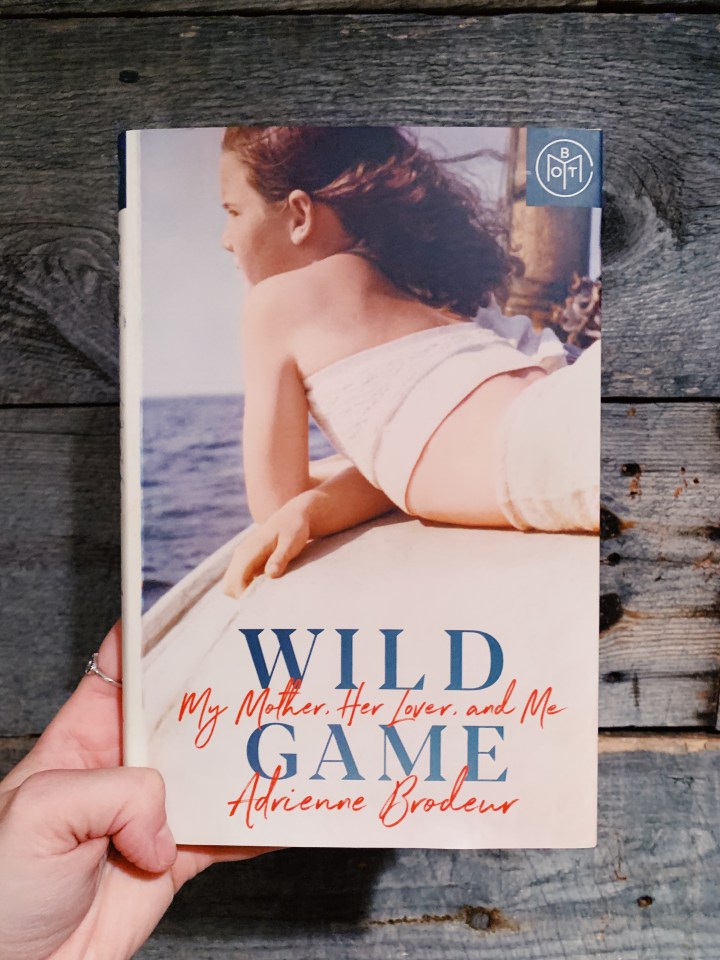
Review of Wild Game: My Mother, Her Lover, and Me by Adrienne Brodeur

One of my Book of the Month Club picks this month was the memoir, Wild Game: My Mother, Her Lover, and Me by Adrienne Brodeur. I loved it. Personally, this rates as a 4.5 stars to me. Almost perfection.

So, there are no perfect parents, right? No matter what you do as a parent, your actions will always affect your children. The good, the bad. The small stuff, the big stuff. Some parent/child relationships are more toxic than others, though, and it can go beyond your usual standard for abuse. For example, burdening your children with things that they shouldn’t be worrying about. In my opinion, putting adult matters on a child’s shoulders is selfishly stealing the carefree aspect that is unique to childhood. Children aren’t meant know EVERYTHING that troubles an adult. This is the type of abuse that takes place in this story.

Adrienne Brodeur was a mere fourteen years of age when her mother giddily confided in her about her affair with her husband’s best friend of fifty years, Ben. Adrienne loves her stepfather but had spent her whole life vying for the attention of her mother, and thus eagerly became her only confidant in the affair for more than a decade. Her mother, Malabar, is known for being charming, intoxicating, and an extravagant cook. She is also utterly selfish, though it took years for Adrienne to see this. At the time, she simply idolized her mother and knew she had to help her mother achieve the love that she insisted she deserved. Malabar climbed the social ladder quite a bit when she married her current husband, Charles. He ended up having a stroke right before their marriage, but she went through with the marriage and took care of him. The diligent care she provided him starting slowly diminishing over the years of her affair. She soon hired a nanny, essentially, to care for him while she would sneak off with Ben. She held extravagant dinners featuring wild game that she would prepare solely so she could continue the affair under her own roof.

We see two perspectives through Adrienne’s eyes: one of the young adult, whose been brainwashed by her mother that SHE is the victim since her husband is not fully capable of taking care of himself. She tells her daughter that they’re doing the best thing, because she couldn’t leave Charles in his state, but that she craves the excitement that Ben provides to her life. Malabar spends a decade lying to her husband, to Ben’s wife (who is also her good friend), and asking her daughter to be complicit in the affair by lying for her and helping them set up dalliances. She idolizes her mother and constantly makes excuses for her. She knows that her mother had an dysfunctional childhood and pities her for the impact that had on her, even though she can’t yet see the way her own mother is impacting her.

Then, we see Adrienne growing into a woman. Her relationships with men have been entirely influenced by her mother’s actions. More than once she is unfaithful or is the other woman in a relationship… and she even ends up marrying BEN’S ADOPTED SON before the affair goes public. Her mother approves of this relationship because she thinks she will be able to see Ben more because of it. As Adrienne matures, she falls into a deep depression. She has mysterious stomach pains and anxiety, and thinks about killing herself. It isn’t until she’s in therapy that she realizes that subconsciously, she’s been agonizing over the fact that Malabar has terribly abused her relationship with her. Her mother always treated her as a friend and if Adrienne didn’t comply with whatever made Malabar happy, she would stop speaking to her, punish her with coldness, or hold her most prized possessions above her head. Malabar promises for Adrienne’s whole life that she will let her wear a family heirloom necklace when she gets married. I won’t spoil what happens there, but I assure you, it solidifies Malabar’s narcissism. Adrienne realizes her mother’s life will always be about what makes Malabar happy, even at the detriment to her daughter’s mental health. She eventually ends up cutting ties with her mom until she is at a more stable place in life.

There’s a lot I haven’t included about Adrienne and Malabar’s relationship because I want readers to still get something out of this book, to really see the depth of how Malabar mistreated her daughter.

Why do I love this book? Because it is a story about family. It’s not the typical heartwarming story. It shows that there can be an ugly side to family. As a kid, you don’t have a say in your environment or the way that people around you treat you. It is only when you get older that you look back at situations and wish you could have sheltered your younger self against them before they changed who you were. Wild Game highlights how we learn to live with what has happened to us, and how we learn to set boundaries and heal. It’s about loving people despite their flaws, but not having to accept the way that they affect you. It’s about forgiving yourself. I love Wild Game because it is a story of a woman who broke the cycle of abuse, and this novel is Adrienne’s enlightened proclamation to the world that you can live a healthy life after toxic parenting. One of the aspects I loved about this book was that it is this heartbreaking and ultimately, empowering true story set against a vivid Cape Cod background. You can truly tell Adrienne loved growing up in Cape Cod despite looking back at her relationship with her mother. She grew up clam digging, fishing, and eating these fresh, succulent catches. She spent her years combing the beaches for sea glass and treasures. The beauty she sees in the world around her offers relief from the story she’s telling. Often books with subjects like this can depress you while you’re reading them, but Adrienne contrasts the toxic relationship with a warm, inviting background. If you like memoirs or books that highlight the intricacies of family relationships, or subtly delve into the way environment can affect your psyche, this book is for you!